
CT scan
A CT builds cross-sectional images from X-rays taken as the scanner rotates around you. It is fast, it is detailed, and it is what your doctor reaches for when they need an answer quickly — especially about bone, chest, or abdomen.
What a CT is good for
Where MRI excels at soft tissue, CT excels at speed and at anything involving bone, air or dense structures. It is also far quicker — most exams are done in a few minutes of actual scanning.
- Head
- Sinuses
- Chest
- Abdomen & pelvis
- Kidney stones
- Cervical spine
- Lumbar spine
- Fractures
- Extremities
- Soft tissue neck
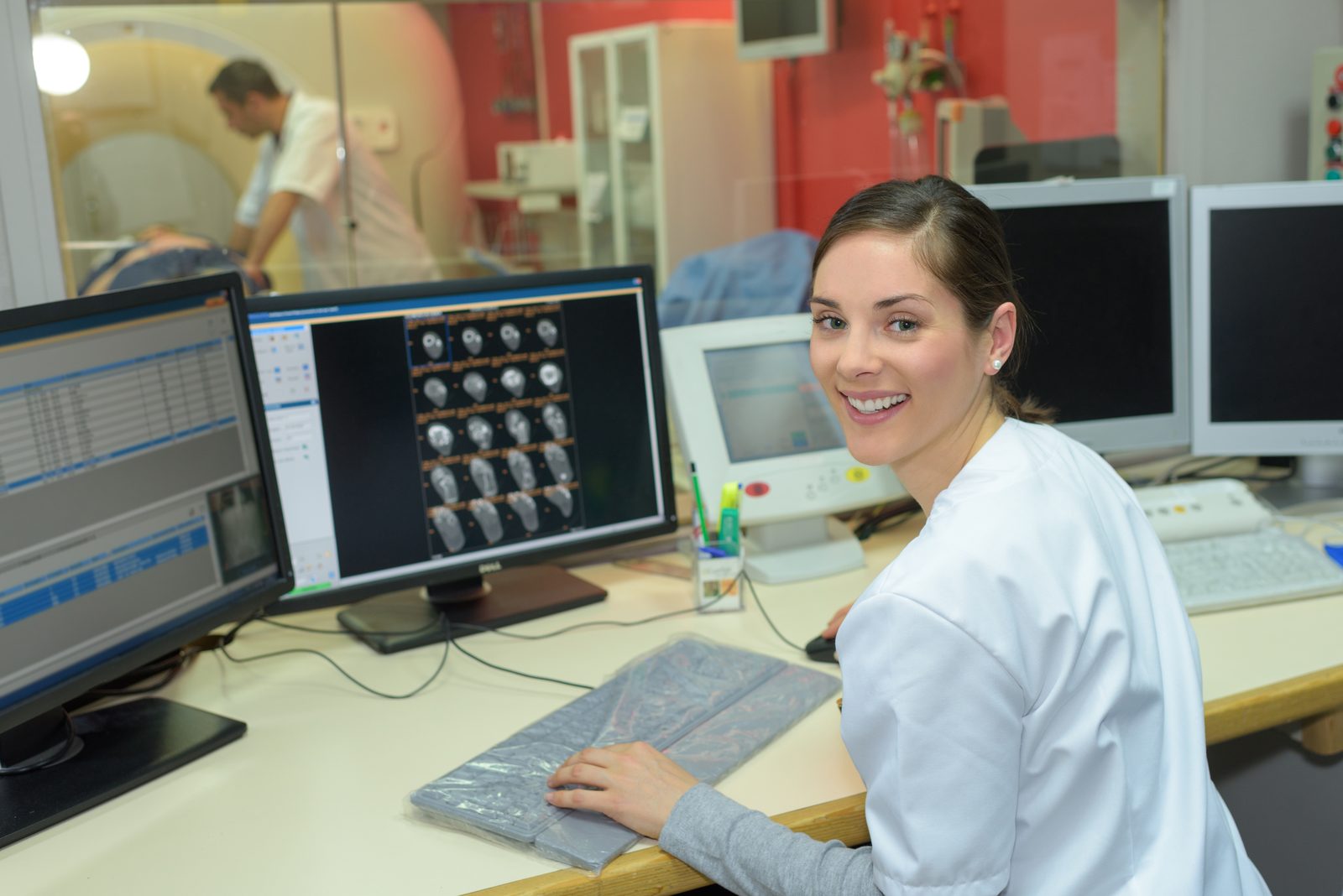
The scanner itself is a ring rather than a tunnel — you pass through an opening only a few inches deep, so it feels nothing like a closed MRI. Most people who find MRI difficult have no trouble with CT.
What the scan is like
You lie on a table that moves slowly through the ring. The machine is quiet compared with an MRI — a low hum and some whirring. For most exams you'll be asked to hold your breath for a few seconds at a time so the images aren't blurred by chest movement.
The scanning itself usually takes a few minutes. Including check-in, positioning and any contrast, plan on being with us for about 30 minutes.
Accredited in CT
Our CT service is an accredited facility of the Intersocietal Accreditation Commission, reviewed against published national standards for equipment, staffing, image quality and dose.
Contrast
Many CT exams use contrast to make blood vessels, organs or areas of inflammation easier to distinguish. There are two kinds, and your order determines which you need:
- IV contrast — iodine-based, given through a vein. It commonly causes a warm flush and a metallic taste for a moment. That's expected and passes quickly.
- Oral contrast — a drink taken beforehand to outline the digestive tract. If your exam needs it, we'll ask you to arrive earlier to allow time for it to move through.
If contrast is ordered, you'll usually be asked not to eat for a few hours beforehand. We'll tell you exactly what to do when we confirm your appointment.
Tell us before your appointment if you have kidney disease or reduced kidney function, are on dialysis, have had a reaction to X-ray contrast or iodine before, take metformin, or are pregnant or breastfeeding. Some of these need a blood test or a change to the plan first.
About the radiation
CT uses ionising radiation, which an MRI does not. That's a real trade-off and worth understanding rather than glossing over.
The dose from a single diagnostic CT is small, and it is chosen deliberately: we scan at the lowest dose that still produces images a radiologist can read confidently. Your doctor ordered a CT because the information it gives outweighs that exposure for your situation. If you're pregnant, might be, or simply want to talk it through, call us before you're scheduled — sometimes an ultrasound or MRI answers the same question without radiation.
How to prepare
- Follow any fasting instruction we give you when we confirm the appointment.
- Wear comfortable clothing without metal fasteners; you may be asked to change.
- Leave jewelry at home and remove piercings in the area being scanned.
- Bring photo ID, your insurance card, and your order if you have a paper copy.
- Bring a list of your current medications.
Afterwards
You can eat, drive and return to normal activity right away. If you had IV contrast, drink plenty of water over the rest of the day to help clear it.
A radiologist reads the images and sends the report to the doctor who ordered the scan.
CT, MRI or X-ray?
Your doctor chooses based on what they're trying to see. Roughly speaking:
MRI
Discs, spinal cord, cartilage, ligaments, tendons, brain. No radiation. Takes longer — 20 to 45 minutes. Open systems available.
MRI →CT scan
Bone detail, chest, abdomen, sinuses, stones, acute problems. Uses X-rays. Usually under 15 minutes.
X-ray
Fractures, joints, chest, alignment. The fastest and simplest of the three. Usually 10 to 15 minutes.
X-ray →Schedule a CT
Call and we'll confirm any prep, check your coverage, and book the closest opening.